The Myers-Briggs Personality Type of Joe Rogan
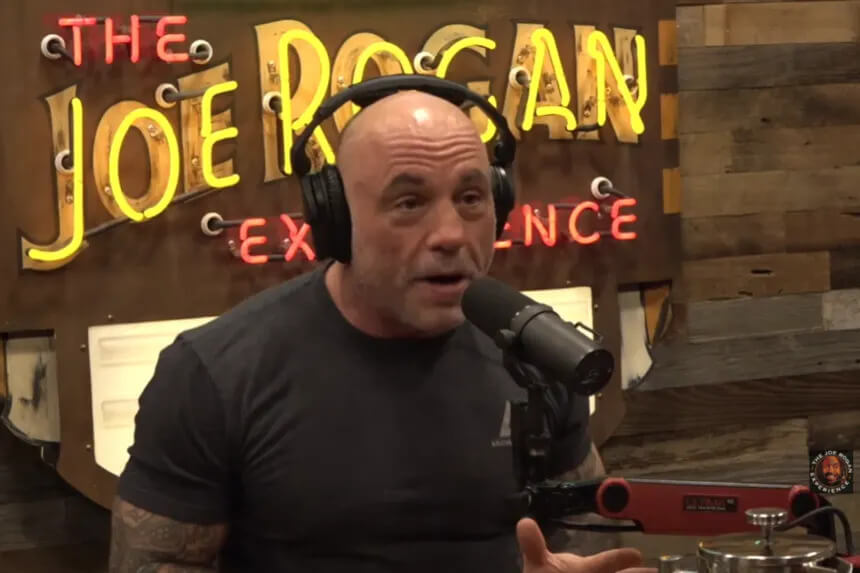
Analyzing Joe Rogan’s Myers-Briggs personality type was kind of a random decision that I made when I was getting suggestions from various people about who to type next. It’s not typical for me to follow podcasts or listen to YouTube, so I only recognized his name because of my stint researching Magnus Carlsen. But, I’m playing around with the idea of typing more “current” people (like Magnus Carlsen), so I thought I’d give Joe Rogan a go. (I was also told that he’s a likely Se dominant, and I’ve really been itching to type an Se dominant. Mozart failed me.)
Anyways, considering that Joe Rogan is typically the interviewer and not the interviewee, there was a limited amount of information to be found on him (or at least, directly about him). I did find some longform interviews (where he was the subject) and other miscellaneous sources. Eventually, I landed on a conclusion which I think is reasonable. Of course, I could be wrong, but I’ll present my case and you can decide for yourself. As per usual, I’ll link to all my sources at the bottom of the article. I hope you find this interesting. Let me know if you’d like to see more content like this!
The Myers-Briggs Personality Type of Joe Rogan
Apparently, there’s varying theories out there on Joe Rogan, but I didn’t actually look for myself. I was told in passing that ENTJ, ENTP, and ESTP were common theories. I ultimately did end up landing on Se dominant, or ESXP, for him, so I’ll cover that first before going into his judging axis.
Joe Rogan, The Se Dominant
“I’m like a stimulation freak. You know, I love like driving fast, and watching crazy stuff. Things like that to me it’s very exciting.”
“I think one of things that makes life so interesting and fascinating is that it doesn’t last. You know, that you really get a brief amount of time here, and really by the time you’re just starting to kind of figure yourself out, who you are, and how not to screw things up so bad, it’s like time’s up.”
Rogan has spent much of his life in or around high stimulation sports. Of course, you don’t have to be an Se dominant to be into (and successful at) sports. However, the first quote above is strikingly similar to how Jung describes Se users, as people seeking stimulation, seeking to reach the height of an experience. Rogan struggled to focus in classroom settings because they couldn’t capture his attention. However, he much more naturally applied himself in competitive sports, like Taekwondo and kickboxing. Even after retiring from competition at age 21, he kept himself around extreme sports, such as promoting and being a post-interviewer for the UFC and hosting Fear Factor. During his various interviews, he talks about the value of pushing your body to the limit, challenging yourself physically, and the mental strength gained from doing so. He states that purely intellectual people don’t understand how this form of mental strength applies to intellectual pursuits.
Anther indication of Rogan being an ESXP can be see in his comedy. Rogan’s comedy is known for it’s physicality, which can be an indication of high Se. Otherwise, there’s a lot of general evidence for high extraverted perceiving (Ne or Se). For instance, when talking about how to navigate life, one of the things he emphasizes is finding something to do that you enjoy and that interests you. He appears to have spent much of his life chasing things that he enjoys, rather than strategizing career moves. The podcast being a good example. He started it purely for fun, not as a career move. He also claims to not strategize who invites onto the podcast, not for marketing or success or controversy or clicks or views. He just has on who he wants to talk to, and doesn’t think much beyond that. (Some of this also indicates a lack of high Te, since he’s not patterning his decisions around concrete goals and a drive for success.)
How About Inferior Ni?
“What am I going to do with my life?”
When talking about his past, Joe Rogan describes young him as being afraid of the future. He had no direction, no goals, and no idea of what he wanted to do with his life. So, after school, he initially took a year off. He eventually starting doing martial arts competitions and teaching, but he still didn’t really know what he was going to do with his life. It was his martial arts buddies that suggested he go into comedy. All of this indicates that Joe Rogan was not naturally someone who thought much about the future. As Se dominants are present-minded individuals, it’s common for inferior Ni to manifest as a fear of the future and avoidance of thinking about it.
“Because those are like little gifts that you get sometimes from the universe out of nowhere.”
As for some general Ni evidence, when talking about ideas, Rogan describes ideas as coming from outside of you, something that strikes that you can’t trace back. He essentially views as ideas as being delivered to you. He explained that he comes up with great ideas when he isn’t trying to write, and then when he does write, he has to go blank and detach from himself. This all sounded more like Ni subconscious processing than it did Ne active brainstorming.
So, Let’s Talk About Introverted Judging (Ti or Fi)
“Keep doing what feels right to do, and keep doing what you’re doing… Don’t let anybody else get involved.”
“But you can’t listen to other people. You’ll become a product of other people’s expectations.”
Before getting into Fi or Ti specifically, I should cover some general high introverted judging evidence. When giving advice, Joe Rogan emphasizes ignoring others and their expectations and finding your own unique interests or passion. He pushes back against getting feedback from others, because you should focus on what’s right for you. That speaks to an identity focus, which aligns with both FPs and TPs.
Now, Does Joe Rogan Have Fi or Ti?
“I think there’s a way to navigate life that’s enjoyable. I think it requires many things. It requires, first of all, it requires love. You have to have loved ones. You have to have family. You have to have friends. You have to have people that care about you and you have to care about them. I think that is primary. Then it also requires interests. There has to be things that stimulate you… You need something that is interesting to you. Something that you’re passionate about.”
“My act is so completely and totally uncensored that the only way I could really pull it off is if I treat the audience like they’re my best friends.”
“I’m very interested in people feeling good.”
“I’m a big believer in as much as I can to spread positive energy and joy and happiness, and relay all the good advice that I’ve gotten.”
“But I’m not interested in the task or even the finished product as much as I’m interested in someone’s passion for something.”
“It’s authentically what I’m interested in. All the podcasts.”
Okay, so that was a lot of quotes, but I like letting people speak for themselves when I can. What I noticed about Joe Rogan’s language is that, in addition to ignoring others and their expectations, he emphasizes passion, kindness, doing what feels right, and being authentic. Sometimes the key to identifying a type is to focus on their language. For instance, any personality type can strive to be kind, but someone talking about it a lot is demonstrating a value focus, which aligns with feeling. Similarly, any type can be logical but someone emphasizing logic and rationality a lot is demonstrating thinking, in the cognitive function sense. In other words, it’s not about the presence of values or the presence of logic. It’s about how your focus and your framing. (Thinkers who deny having emotions are acting illogical, because yes, thinkers can be illogical.)
So I said all that to say, Joe Rogan appears to have a focus on people, values, and emotion. He wants to make people feel good. He wants to spread joy and happiness. He emphasizes finding love and friendship. And, he isn’t just interested in finding his own passion, but he focuses on passion in others. For instance, when talking about watching different shows, such as furniture making, he explained that he’s not usually interested in the task, the process, or seeing the finished product, but rather in the passion of the person doing the task. This demonstrates a more personalized focus and a people focus, rather than the task-oriented nature of thinkers. (If you want to see the opposite of a personalized focus, check out this interview with Stephen Meyers where Meyers tends to answer most questions by first explaining the general theories or rationale out there before eventually getting around to giving his own opinion on the matter.)
Rogan also claims to not think much about the impact of his show, or what people think of it. He emphasizes the need to be good at self-auditing because of this. This sounds more like Fi to me than Ti/Fe, since he’s completely disinterested in not only feedback but also thinking about the social effect of his show.
How About Te?
“One of the biggest failures in life is to be extremely successful financially but everybody hates you. Everybody hates you and you’re just miserable and alone and angry and depressed and sad.”
“You put too many eggs in one basket. You put too many eggs in the financial basket or the success basket or the accomplishment basket and not enough in the friendship and love basket. And there’s a balance to that.”
Earlier, I mentioned how Joe Rogan doesn’t strategize who he has onto his podcast. He invites people that he genuinely wants to talk to. This indicates a preference for Fi over Te. In the quotes above, he talks about needing to balance success and accomplishment with friendship and love, and that how the biggest failure in life is to that the “success” (or Te) aspect overemphasized. That looks like a devaluing of Te. However, when getting interviewed by Lex Fridman, he asked Lex what his objectives were for going to Russia and what the timeline was, to which Lex replied that he doesn’t think in terms like that. That interaction appeared to be Rogan’s Te surfacing.
“When I’m working out seven hours a day and just so obsessed, and all I was thinking about was winning…If they were working out five hours a day, I wanted them to know that I was going to work out an extra three hours, and I was going to get up early, and I was going to text them all.”
In addition, Rogan describes himself as being hyper-competitive and obsession prone. The way he described it struck me like Se-Te. During competitive times, he describes himself as essentially a different person, a version of him which he states is very dark and scary. He becomes extremely disciplined and trains endlessly, with every other aspect of his life getting sidelined. Rogan needs to work harder than his competitors and prove to them that he is putting in more effort than them. He describes this version of him as a conqueror, as opposed to the artist he typically sees himself as. Video games are apparently very dangerous for him because of this obsessive, competitive tendency.
In Summary…
That’s about all I got. I’ll link to my specific references below. Let me know what you think, and who else you’d like to see analyzed! Of course, I encourage Paid Requests. 🙂
References
https://www.youtube.com/watch?v=VcJMSpfumCI
https://www.youtube.com/watch?v=gk4tEO4jDUM
https://www.youtube.com/watch?v=FKCJWkPehdY
https://www.youtube.com/watch?v=dU5x2B3CBdE&t=950
https://www.youtube.com/watch?v=DrQ9dPQbfes
https://www.youtube.com/watch?v=1ml79SRkFIY
https://www.foxnews.com/media/rogan-says-dems-full-sh-woke-1-0-stances-went-far-strategists-agree
https://www.youtube.com/watch?v=nOZFy-NoXfQ
https://www.youtube.com/watch?v=hWv5WUs6gmo
Hi there! If you enjoyed that article, leave us a quick comment to encourage us to keep writing, and check out our Updates and Current Projects. In addition, if you've found our content helpful, please consider Buying Us A Coffee to help keep this website running. Thank you!
This analysis seems spot on for ESFP! I agree.
“(I was also told that he’s a likely Se dominant, and I’ve really been itching to type an Se dominant. Mozart failed me.)“ Well that sort of re-contextualizes the Mozart article for me, hahaha.
I’ve heard OF Joe Rogan but I haven’t actually listened to his podcast for extended periods. I think I remember a moment that could be used as Te evidence, though. He was talking with Candace Owens. (Consensus on her is ESTJ but I think she’s ENTP for… reasons. Like this example and a pattern of her theories breaking from the generally accepted… notsurewhatwordtouseforthis but… framing? Like admitting she’s open to the possibility of aliens and the Brigitte Macron stuff and talking about the “authenticity economy” or some similar phrasing when talking about how other people seem to value it, framing it more as a social observation than something she actually practices or cares particularly about which kind of seems lower Fe to me. There’s also more extreme examples regarding a more recent investigation she undertook but I don’t think I should speak on that here.)
I think they were talking about researching a certain topic and Candace said she was researching to prove/disprove her opinion (Ti, maybe?) and Joe seemed a bit taken aback by her phrasing, saying “You research first and THEN you form your opinion based on that, right?” or something similar which sounded sort of Te-like to me. I think Candace backtracked and agreed but this might’ve been an Fe maneuver to avoid looking biased or foolish to the audience, I think. *Looks back at comment* This was supposed to be a short comment. Ugh, I’m so long-winded sometimes…
This was actually one of your shorter comments, lol.