7 ESTJ Stereotypes
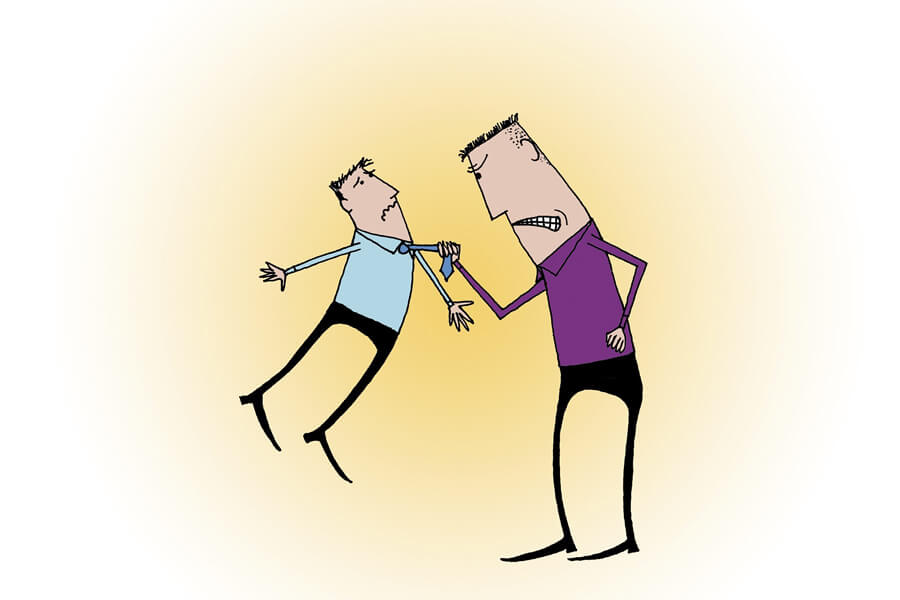
ESTJs are probably the most hated personality type in the Myers-Briggs theory, and the stereotypes are a huge contributor to that. It doesn’t help that there’s very little ESTJ representation in typology communities. After all, who wants to identify as the personality type that everyone hates? And of course, since the stereotypes are the way they are, most ESTJs who end up mistyping aren’t even intentionally refusing to identify as their correct type. They just don’t fit the extreme caricature that the ESTJ personality type has become. This is why I think it’s important to write in-depth, stereotype-busting articles. People need to see each type for what actually defines it, rather than limiting their perspective to the popular stereotypes.
So, What is a Stereotype?
People can be very quick to accuse any trait of being a stereotype, if it’s convenient in the moment. So, perhaps we should define what a stereotype actually is. Well, a stereotype is a “a standardized mental picture that is held in common by members of a group and that represents an oversimplified opinion, prejudiced attitude, or uncritical judgment” (https://www.merriam-webster.com/dictionary/stereotype).
In short, a stereotype (within the context of personality theory) is an oversimplified generalization of a particular personality type. Not deep or well-thought-out. In personality theory, stereotypes can be trends that people have observed about certain personality types, but they can also be misconceptions that have been popularized for some reason or another. Perhaps someone had a few negative experiences with ESTJs, and then transposed the negative traits from that ESTJ onto all ESTJs. Either way, the point is that stereotypes can be true, and stereotypes can be false, depending on the scenario. That’s why it’s important to address them.
8 ESTJ Stereotypes
Cognitive functions (which are the building blocks of the 16 personality types) define thought processes, which influence our behavior and the skills that we decide to foster. Below, I’m going to address each of the common stereotypes that I’m aware of, and explain how they may or may not tie back to the ESTJ’s cognitive functions. Some ESTJs may relate to the stereotypes that I’m about to go over. However, others may not. Either way, these stereotypes should not be used as the basis for identifying someone as an ESTJ. Let me know if the comments what you think and if I miss any of the stereotypes! I also welcome thoughts and comments from those who are ESTJs or know ESTJs personally.
1. ESTJs are the “Executive”
I’m not a fan of the nicknames coined for each Myers-Briggs personality type, because people often get the impression that that’s all the personality is or can be. In the case of the ESTJ, it’s the “Executive”. Most people, when they think of the ESTJ, think of business executive or managers. They think of an ambitious individual who’s climbing the ladder in a business environment or holding some kind of leadership role. However, every personality type can end up in a wide range of environments, and the ESTJ is no exception. Part of the reason why this stereotype has formed is likely due to dominant Te’s tendency to excel at logistics, especially when coupled with auxiliary Si. However, while that strength can certainly give them an advantage in business management roles, it can be utilized in a wide range of jobs and professions. Some ESTJs aren’t even career-oriented at all. For instance, I’ve known ESTJ women who chose to be a stay-at-home moms. The bottom line is that while dominant Te can drive ESTJ towards this achievement-driven environment, some may find purpose or fulfillment elsewhere.
2. ESTJs are hyper-controlling dictators
In addition to thinking of ESTJs as the executives, people often take it a step farther and think of the boss that everyone hates. The boss that micromanages everything you do, never gives you a break, only cares about the bottom line, etc. Certainly, ESTJs can end up like this, but so can other personality types. It’s true that ESTJs tend to be detail-oriented, which means they’ll enforce specific standards and requirements when in leadership roles. However, the idea that they’re always a dictator, and always someone that you’re going to hate, is extreme. Similarly, many people assume their controlling parent is an ESTJ, but there’s a lot of context that needs to be assessed before making that leap. After all, it’s a parent’s job to take care of their children, which includes structure and discipline. The average ESTJ (like all human beings) will have a softer side, which they’ll show to those who are closest to them, and many have a good sense of humor (as their way of dipping into tertiary Ne) that they share with those around them.
3. ESTJs are heartless and insensitive
I was going to have a section on ESTJs being the unyielding disciplinarian, but some of this feels like it’s getting redundant. Bottom line: everyone thinks ESTJs are heartless and cruel. That’s completely false. ESTJs can be very caring individuals. They just typically demonstrate that care in a Te way, which means solving your problems, taking action to help you, being honest, being loyal, etc. Their feeling function is inferior, which means it can be difficult for them to express it directly. So, many will choose to express it in other ways, such as acts of service. They can be prone to accidentally stepping on people’s feelings in this process, but that is not typically their intention. They often just generally lack awareness when it comes to the emotional realm, which makes tracking people’s emotions more of a struggle. They usually prefer it if people are as straightforward with them as they are with others.
4. ESTJs are bootlickers
ESTJs are often described as people who do whatever it takes to climb the social ladder, which includes sucking up to their superiors or anyone who has any kind of authority or social status. Some ESTJs are like this, because they understand how the system works and know how to play the game. Their inferior Fi can create a disconnect from their sense of identity, creating an inauthentic individual that shifts their image whenever necessary. However, that’s not all ESTJs (and it’s not exclusive to ESTJs). In addition, bootlicker is a rather extreme term, implying someone who has no self-respect. Even if an ESTJ does shift their identity to cater to those in authority, it doesn’t mean they’ll do so to such an extent that they become complete hypocrites, self-degrading, or lack any kind of self-respect. Middle zones exist.
5. ESTJs will do whatever it takes to win
In other words, they’ll cross over any moral boundaries necessary in order to ensure their victory. This is something people mess up in typology all the time, so pay close attention as I say this. Morals are not type-specific. In other words, your type does not dictate whether or not you have morals. Your type may influence how you interact with your morals or reason out our morals, but it will indicate whether or not they are present. People make this mistake a lot because they equate values to morals, and those are two different things. So, with that being said, the ESTJ chasing success who lacks moral boundaries will absolutely be the type who does whatever it takes to win. But not every ESTJ will be like this. Many will have some kind of code of honor, and lines that they will not cross.
Related Article: Feeling vs Thinking: What Are Values?
6. ESTJs are rigid, unimaginative and closed off to possibilities
ESTJs typically prefer “tried and true” because Si views the familiar as more guaranteed, and Te wants empirical evidence. They want to see an established pattern to prove reliability. However, their tertiary Ne is a playground for them. ESTJs are not disconnected from it, and often enjoy exploring and experimenting, usually in a more controlled manner. ENTJs get the reputation of being the gamblers and the risk-takers, but ESTJs are also capable of adapting on the fly. If they perceive that the reward of a potential opportunity outweighs the risk, or the change itself is necessary, they’ll usually be willing to give it a go, especially if there’s some concrete evidence to support the proposition. Many ESTJs also have a variety of hobbies, and rich internal world. Many also have creative outlets that they excel at. Remember: every ESTJ has a baby INFP hiding out in somewhere in their mind.
Related Article: ENTJ vs. ESTJ: 5 Differences
7. ESTJs are unyielding disciplinarians
It’s true that many ESTJs are strict. They’re prone to having high standards, and enforcing those standards. But the idea that they’ll have absolutely no mercy, and you’ll get crushed if you take one step out of line is not necessarily true. This stuff is subjective to the person. Some might be like that, but some will have empathy. In addition, some may not have the confidence levels to be that kind of enforcer. It just depends. This is another one of those things that was taken to the farthest possible extreme, and then applied to all ESTJs (probably by some poor individual who was crushed under the weight of an ESTJ’s ire.)
Hi there! If you enjoyed that article, leave us a quick comment to encourage us to keep writing, and check out our Updates and Current Projects. In addition, if you've found our content helpful, please consider Buying Us A Coffee to help keep this website running. Thank you!