The Myers-Briggs Type of Albert Einstein
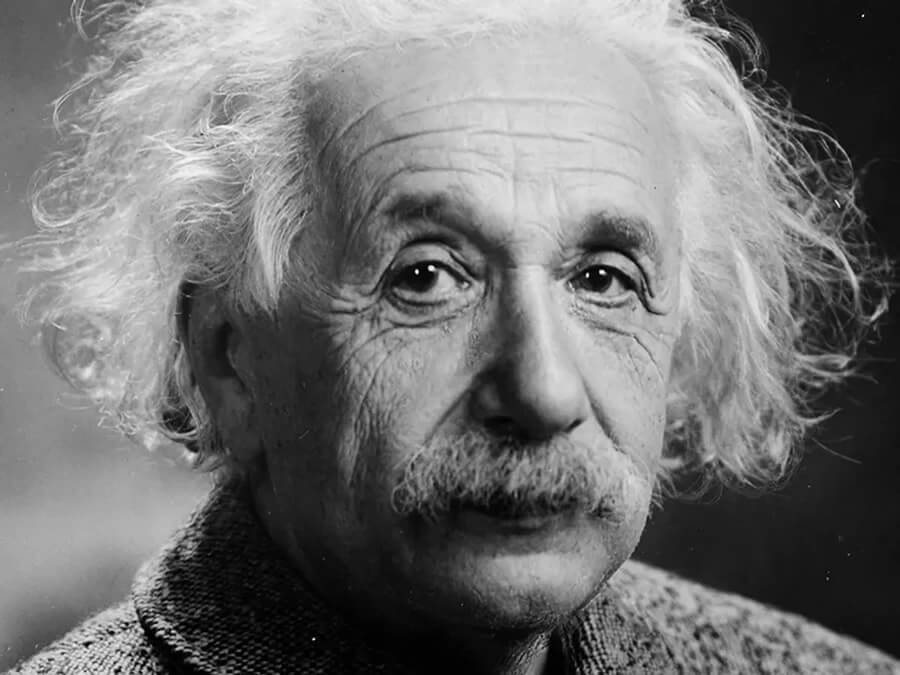
Albert Einstein was an interesting character to study. When I first started reading about him, I jumped straight to the ENTP Myers-Briggs personality type However, the more I read, the more I started to question. The Ne and Ti seemed extremely obvious. In fact, Einstein is probably where the stereotype of the NTP came from: the disheveled, absent-minded yet brilliant professor. But, is he an INTP or an ENTP? That’s where I began to hesitate. Actually, as I’m writing this introduction, I have yet to determine which NTP he is. (I’m confident I’ll have landed on a conclusion by the time I get to the end.)
So, here’s what I’m going to do. I’m going to start by demonstrating the evidence for Ne/Si and Ti/Fe. I’ll include some contrasts to strengthen my case and teach the functions, but I won’t be writing any sections dedicated solely to contrasts/comparisons because Einstein is clear-cut in this regard. No other cognitive function stack makes sense. At the end, however, I’ll write an extraversion vs. introversion comparison section, focusing on things like inferior functions and which function appeared to have the priority.
For the record, I got my information from an in-depth biography, which included direct quotes from Einstein, in addition to a couple of other sources. References will be listed at the bottom of the page. If you enjoy reading this breakdown of Albert Einstein, you’re welcome to submit a Paid Request for another historical figure of your choice. Let me know your thoughts in the comments!
The Myers-Briggs Personality Type of Albert Einstein
“I was originally supposed to become an engineer, but the thought of having to expend my creative energy on things that make practical everyday life even more refined, with a bleak capital gain as the goal, was unbearable to me. Thinking for it’s own sake, like music!” – Albert Einstein
Overview of Einstein’s Ne/Si
“I am enough of an artist to draw freely upon my imagination. Imagination is more important than knowledge. Knowledge is limited. Imagination encircles the world. Logic will get you from A to Z; imagination will get you everywhere. Imagination is the highest form of research. I never made one of my discoveries through the process of rational thinking.”– Albert Einstein
“People like you and me never grow old. We never cease to stand like curious children before the great mystery into which we were born.” – Albert Einstein
Einstein is known for doing “thought experiments”, which basically just means that he spent a lot of time in his head, imagining things, conceptualizing, and playing out theories. This is one of the ways he came up with the ideas for his theories. Einstein could juggle a variety of ideas in his mind simultaneously. Early on, before getting much deeper into a physics, he dabbled with inventions as a hobby. He came up with multiple ideas for potential new devices, such as noiseless refrigerators.
Einstein believed that curiosity and imagination are important, viewing life and the universe as a mystery to be solved. The past was of little interest to him, which shows his devaluing of Si. At one point, he states, “Exploration of my ancestors leads nowhere.” This perspective held within the realm of science. He tended to get frustrated when his professors focused on well-established theories, wanting to learn more about new ones. He felt little regard for “received wisdom”, as the book I read put it, and “saw the old framework as cumbersome and unnecessary and was delighted to be rid of it.” One of Einstein’s advantages was that the current well-accepted theories didn’t hold him back from considering new ones. Henri Poincare, when writing a recommendation letter for Einstein, explains, “What I admire in him in particular is the facility with which he adapts himself to new concepts. He does not remain attached to classical principles, and, when presented with a problem in physics, is prompt to envision all the possibilities.”
As a professor, Einstein took a very casual approach, which was highly unusual at the time. He didn’t do organized lectures, and did minimal advanced preparation. Early on, an observer described his lectures as holding monologues, which is a trap many NPs specifically fall into. Overtime, Einstein used his natural informality to his advantage. He used cards with scribbles to lecture off of rather than prepared notes, and his students got to watch him develop his thoughts as he spoke. He would let them ask questions, and would check if they were following what he was saying. The tendency to develop and share your thoughts in real time is indicative of Ne rather than Ni.
Overview of Einstein’s Ti/Fe
“As a boy of 12, I was thrilled to see that it was possible to find out truth by reasoning alone, without the help of any outside experience.” – Albert Einstein
“I am not more gifted than the average human being. I am just more curious than the average person and I will not give up on a problem until I have found the proper solution. This is one of my greatest satisfactions in life — solving problems — and the harder they are, the more satisfaction do I get out of them.” – Albert Einstein
Einstein’s strength lay in his ability to understand systems, or the laws within them. He was described as being far better at this than empathy. He had a natural propensity towards being aloof and detached from others, which only seemed to get worse with age. Although, it’s important to note that Einstein developed solid social skills even to the point of being seen as generally friendly and even charming. However, those who knew him well recognized how superficial and fake he could be public. He often acted different to those close to him, and actively avoided emotional entanglements. The more his personal life would fall into turmoil, the more he would detach from his emotions and bury himself in his work. (However, with all that being said, he did form lasting friendships, especially in the intellectual arena.)
Einstein’s prioritized his reasoning above all else, including conventional wisdom. He discovered that truth was possible to determine through reasoning alone, and that become the sole thing he relied on. He paid little attention to what was already established, focusing solely on what he thought made sense. In addition, Einstein enjoyed thinking for its own sake, often getting lost in his own thoughts and daydreams. He expressed a general disdain for structure (especially when it came to school), and learning facts. He fought against adapting to any form of regimentation or established standards (hence his disheveled appearance and disorganized nature). This all points away from Te, and indicates a strong Ti preference.
Eistein was a strong proponent of individuality, since only individuals can produce new ideas. He tended to be rebellious, because he was determined to do things his own way, rather than follow the standards of the time. Einstein often questioned authority, and demonstrated a critical nature. For instance, when struggling to find a job, he decided to criticize the work of the person he was asking to hire him, thinking that would impress the person. It did not. For years, he struggled to get a job in the academic world, and his struggle to get along with people was the biggest roadblock thwarting his efforts.
Is Einstein an ENTP or an INTP?
As mentioned, I went back and forth between ENTP and INTP for Albert Einstein. For ENTP (which means inferior Si and dominant Ne), my primary evidence was as follows:
- Einstein seemed to be reasonably socially adept, and was even described as charming. While he claimed to dislike the attention of being a celebrity, those close to him noted that he enjoyed it more than he let on and even played to the crowd.
- Einstein seemed to be reasonably spontaneous. During his younger years, he left his school suddenly when he only had a short time left until graduation, and moved to a different country. There were also plenty of instances where he did things hastily, either when feeling pressured or emotionally riled up.
- Einstein did little to no preparation for his classroom lectures, potentially suggesting dominant extraverted perceiving.
- Einstein placed a strong emphasis on imagination, suggesting perhaps that Ne was prioritized over Ti.
- Einstein had a disdain for monotony, and seemed to avoid settling down, especially later in life. That could be inferior Si.
- Einstein was extremely absentminded, to the point of frequently forgetting keys, or other important belongings, requiring him to rely on the good graces of others. He also often forgot to eat. His second wife managed his schedule, and made sure he ate. That could be inferior Si.
However, with all that being said, INTPs often devalue Si, and introverts can be socially competent. In fact, introverts prior to the era of the internet often were, because they had to interact with people regularly to do just about anything. Social skills were far more required back then, than they are now. And of course, we know that perceivers in general are prone to being spontaneous. In addition, the imagination emphasis and absent-mindedness could actually speak to introversion, or a subjective focus, coupled with high intuition. Perhaps you see where this is going. Allow me to lay out the evidence for INTP.
- Einstein’s greatest personality imbalance seemed to be in his thinking/feeling axis, which suggests a dominant/inferior relationship. He was prone to acting indifferent, aloof, impersonal, and even cold with others. He cut himself off emotionally, and actively avoided emotional entanglements. When he was acting social, those close to him readily identified this behavior as fake. Fe that’s any amount of developed will seem more genuine. Einstein legitimately struggled with things like empathy and relationships, constantly angering others and getting himself in trouble.
- Einstein, on average, resisted adapting socially. This included when it would have made sense or would have aided his career, such getting along better with his professors or forming positive connections with those who might have gotten him a job later on.
- Einstein detached himself from any sense of community or belonging, in the sense that he spent most of his early years refusing to identify with his ethnic heritage as a Jew, and even renounced his citizenship to the country of his birth (Germany), resulting in him being stateless for a time.
- Einstein didn’t seem to care for external experimentation, unless it was necessary to prove his theories. Otherwise, his experimentation remained limited to “thought experiments”, which points to Ne serving Ti. Carl Jung described dominant Ne as being very proactive, needing to engage with objects to test out potential or possibilities. Eistein’s scope and focus seemed relatively limited to theories he had been playing with for quite some time.
- Einstein preferred to work in complete solitude for long periods of time. Although if in a noisy environment, he could tune anything out and hyperfixate on whatever he was working on. Einstein collaborated when necessary, when he needed someone else’s expertise, but for the most part, he would lock himself away in his room and think. There’s no indication that he used people as sounding boards, or involved them more than was absolutely necessary.
In Conclusion…
I believe there’s a greater case for Einstein being an INTP than an ENTP. Of course, you’re welcome to disagree, but that’s where the evidence led me. In the near future, I intend to release an article analyzing another scientist who shows very clear Ne dominance, to showcase the contrast between these two personality types. So, stay tuned for that!
References:
Einstein: His Life and Universe by Walter Isaacson
https://www.youtube.com/watch?v=co3FrMo4WXc&t=4708
https://www.biography.com/scientists/einstein-love-life-wives-affairs-letters
https://www.goodreads.com/author/quotes/9810.Albert_Einstein
https://excellencereporter.com/2019/06/05/albert-einstein-on-the-wisdom-and-the-meaning-of-life/

Hi there! If you enjoyed that article, leave us a quick comment to encourage us to keep writing, and check out our Updates and Current Projects. In addition, if you've found our content helpful, please consider Buying Us A Coffee to help keep this website running. Thank you!
Richard Feynman! Is it him? By the way, I especially loved this article as I was curious if he might be ENTP. But overall it leans slightly more towards INTP (not with 100% certainly but the evidence for Ti-Fe imbalance was very sound imo). But I will say though that the aspect of absent-mindedness and being forgetful reminded me of the stereotypes surrounding Ne users and how they may possibly be “clumsy”. I personally believe we should just specifically ditch that whole thing entirely, like not use it at all for cognitive function evidence. It kinda sounds silly to me how clumsiness (which happens to anybody at anytime) can somehow point to a pattern within the way someone thinks, arrives to conclusions and reacts to various situations. Like even absent-mindedness (forgetfulness) should be used as light evidence at most. Not shitting on your body of evidence btw a lot of it made so much sense Idk just my 2 cents. Let me know what y’all think.
Also, as someone who listens to classical music ( mostly piano… cuz I play it), it would be so awesome if y’all dived into the type of Frédéric (Fryderyk) Chopin, especially after the quinquennial (except for 2021 cuz of covid) Chopin piano competition recently ended. To this day, I’m not sure about his perceiving axis but his dominant function is so clear.
It’s quite interesting or fascinating how unbalanced one could be in the inferior. Also I enjoy your articles on the many different topics.
One thing I’m working on right now is myself trying to reason out a particular type that I am but it been hard because I’m neurodivergent so it not exactly clear cut.
Even as an NTP (INTP specifically) myself I still get us confused when I’m trying to type people, haha. I usually try to identify what the inferior function is, like you ended up doing here, but the fact that there are socially introverted ENTPs and socially extraverted INTPs muddies the waters since you can’t necessarily use how much someone wants to be around people as an indicator of Fe placement.
I also find Inferior Si sort of weird but I think I found a real-life example that might be a good go-to example if I’m trying to visualize or “grasp” it. Ken Levine (ENTP), a game developer, when he was working on Bioshock Infinite kept coming up with new ideas for the game which kept pushing development back and making the game take longer and longer to release (He was responsible for Bioshock, a previous game that was INTENSELY successful so the studio gave him a lot of leeway in his creative process, hoping he’d repeat that.) to the point where someone was working on an area of the game for a year and a half I think and then he decided to change it and the person quit on the spot. (Though in interviews he did say he liked hanging out with his team and working on the game and could do it forever if he could get away with it so it’s possible he was drawing the process out until the studio forced him to put out SOMETHING they could sell.) I guess the lack of permanence and the drawbacks of that might be indicative of inferior Si? I guess just like inferior Fe it can probably manifest in a variety of ways but the ENTP should generally have some sort of problem with it (without development) like us INTPs have with our Fe.
Good article! I didn’t know all that stuff about Einstein. I heard some people talk about how he became more social later in life as a sign of him developing his inferior function but you said he became more reclusive/aloof as he got older so I guess maybe that’s not always the case? Interesting read anyways, haha.
Interesting example! That does sound like Ne dom/inferior Si.
In regards to Einstein, it’s kinda both. I think he got more charming and socially competent (although he seemed to always reasonably socially competent) but he got more cut off from close personal relationships. He avoided entanglements more. The Fe mask got better but he also grew more detached